Battery storage economics
Every Charge.
Every Dollar.
Battery Economics provides objective, data-driven tools for residential, commercial, and industrial storage decisions. We model installed cost, usable capacity, utility-rate savings, solar value, incentives, grid-services revenue, resilience, degradation, financing, and replacement risk, so you can see whether a battery pays off and which assumptions make it work.
Illustrative only. A 13.5 kWh battery covering 3 kW of a 4.2 kW evening load from 6 to 9 p.m., on a rate with a $0.31 per kWh peak premium, avoids about $2.80 a night before round-trip losses.
The proposition
A battery is a small power plant.
The question is what it is worth.
Battery Economics provides objective, data-driven analysis of battery storage. We calculate the cost, sizing, backup capability, utility savings, solar value, incentives, and long-term economics of battery systems so you can understand whether storage makes financial and practical sense for a home, business, or facility.
A battery can provide much more than backup power. Depending on the utility, rate structure, solar system, outage exposure, and available programs, its value may come from reducing peak electricity costs, storing excess solar production, participating in virtual power plant (VPP) programs, improving resilience, or a combination of these benefits.
No sales pitch. No assumption that a battery is always the right answer. Just the economics behind the decision.
Storage applications
One technology. Three different investment cases.

Residential
Home battery storage
Size backup capacity, value solar self-consumption, test time-of-use savings, account for incentives, and see whether the household investment pays off.
Residential calculators →
Commercial · Calculator live
Commercial battery storage
Analyze demand-charge reduction, tariff structure, resilience, solar integration, financing, and grid-services revenue for commercial facilities.
Commercial calculator →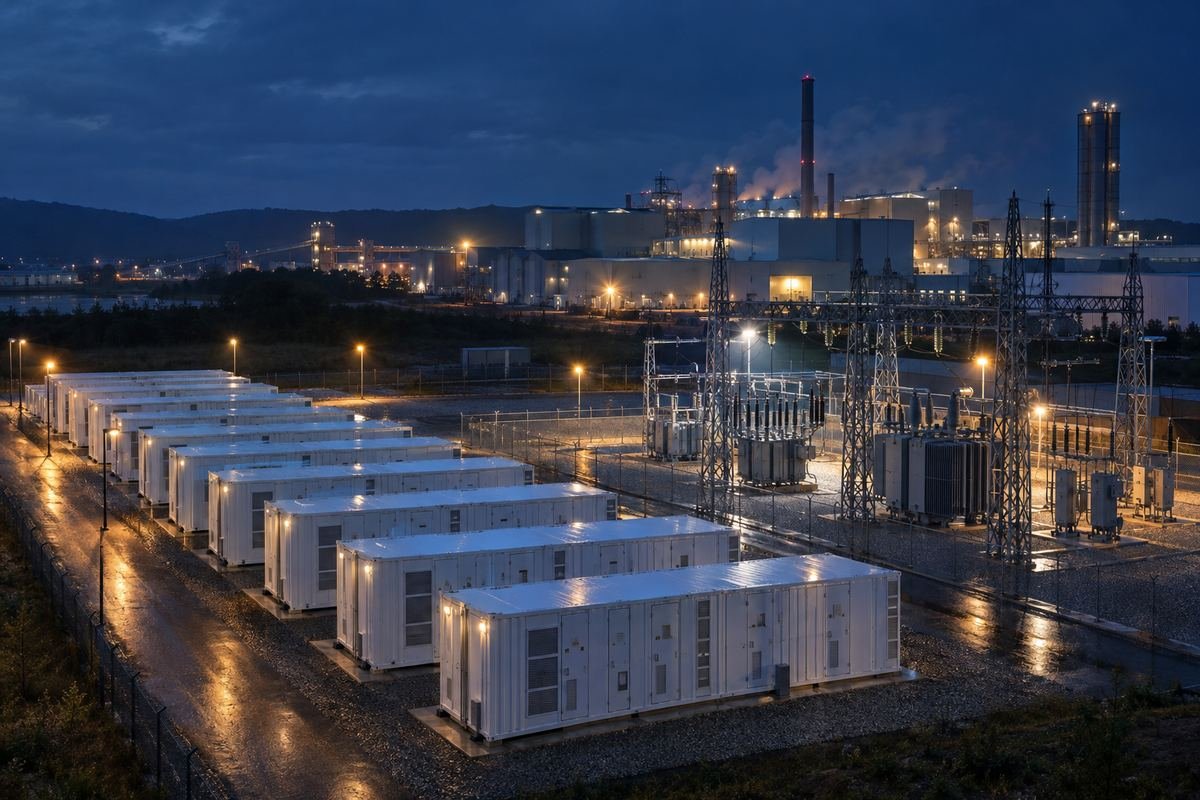
Industrial · In development
Industrial battery storage
Model high-load facilities, coincident peaks, power quality, production continuity, large-scale demand response, and project-level returns.
Industrial storage →Four ways a battery earns
Same box on the wall. Four different business cases.
A battery's value depends on what it is asked to do. Each job hinges on a different variable: outage risk, rate design, solar export rules, or access to a grid program. Most good investments stack two or more.
01
Backup power
Keeps critical loads running through an outage. Real value, but it doesn't show up on a bill, so it is hard to price.
Driven by outage frequency and duration
02
Bill savings
Charges when power is cheap and discharges at peak. For businesses, it can also shave the monthly demand charge.
Driven by peak/off-peak gap and demand charges
03
Solar storage
Stores midday solar for the evening instead of exporting it. Worth most where export credits are low.
Driven by net billing and export rates
04
Grid services
Enrolls in a virtual power plant or demand response program and is paid to discharge during grid events.
Driven by program access and payment rules
Every line item · one ledgerWhat's included
Every line item, accounted for.
A battery decision is a ledger: what the system costs to buy and run, against the value streams it can realistically capture. Our calculators keep each line separate so you can see which ones carry the result.
- Equipment, installation and panel workYou pay
- Charging losses, degradation and replacement riskYou pay
- Financing and interestYou pay
- Time-of-use and demand-charge savingsOn the bill
- Solar self-consumption valueIf paired
- VPP and demand response paymentsProgram-specific
- State and utility rebatesOne-time
- Resilience and avoided outage lossesHard to price
The tools
Six calculators. One investment decision.
Residential · Calculator
Battery Size Calculator
How much storage is needed, in kWh, continuous kW and surge kW?
Residential · Calculator
Battery Economics Calculator
Is a home battery financially worthwhile? Payback, NPV and financing compared.
Residential · Calculator
Solar + Battery Calculator
Store solar or send it to the grid? Adding a battery vs. buying a bundle.
Residential · Calculator
Backup Runtime Calculator
What can a battery power during an outage, and for how long?
Incentives · 24 program rules
VPP Earnings Calculator
What virtual power plant programs in a state pay a home battery over 10 years.
Commercial · Calculator
Commercial Storage Calculator
Demand-charge savings, 15-year cash flow, IRR and debt-service coverage.
Analysis
Read the economics.

Case study
Home battery under a time-of-use rate: 12 utilities compared
Why the price gap and peak-window length matter more than a high rate.
Read →Case study
The hosted home battery: Base Power and Energywell
A low-cost battery in exchange for a long energy contract, compared with owning one.
Read →Case study
Getting paid to share a home battery (VPPs)
One 13.5 kWh battery run through 17 virtual power plant programs in 14 states.
Read →